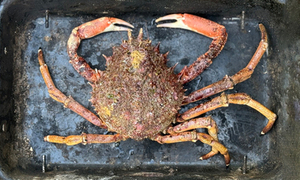
The carapace is spherical in form, broad, and somewhat flattened. It is coated with tiny tubercles or granules and has a smooth to slightly grainy appearance. The carapace has a smooth or somewhat rugose surface and is broader than it is long. Typically, brown or reddish-brown, the carapace and legs have lighter mottling or patches that help them blend in with their rocky and sandy native surroundings.One characteristic that sets this species apart is its robust and very short chelipeds. One claw is frequently larger than the other due to the asymmetry of the claws. It is called “short-fingered” because the claws are usually covered in tiny spines or tubercles, and the fingers are often shorter than those of other similar crabs. The walking legs have a smooth texture, are long and thin, and frequently have tiny setae or spines covering them. The sharp points of the legs facilitate grasping and movement. The eyes are situated on little stalks that can retract into their orbits for safety. Situated between the eyes, the antennae are small and pointed. The large, visibly segmented abdomen is folded beneath the thorax.