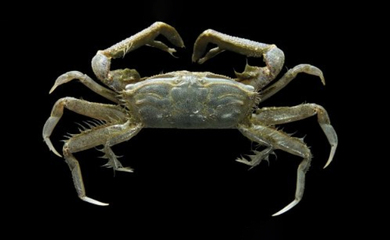
Generally, the carapace is large and shaped something like an oval or hexagon Its texture ranges from smooth to somewhat grainy, and it is usually convex, giving it a domed look. The long, thin legs are designed for walking on soft surfaces like dirt or sand. To help in movement and burrowing, they are typically coated in tiny hairs or spines. One claw on each chelae is noticeably larger than the other, indicating asymmetry in the structure. The tiny claw is more delicate, whereas the larger claw is stronger and frequently employed for item manipulation and defense. Usually short and not very noticeable, the rostrum protrudes slightly from the front of the carapace. It could have characteristics like beaks or tiny spines. A wide field of view is provided by the eyes location on short, flexible stalks that protrude from the carapace. This is advantageous for exploring the substrate and seeing potential predators. Due to their sensitivity and relative shortness, the antennae help with food detection and environmental sensing.