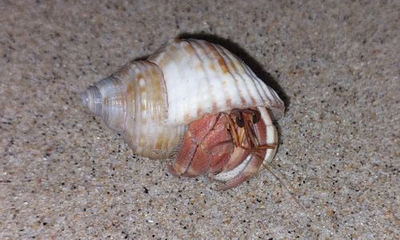
Typically, variable coloration ranging from brown to grayish, with potential darker spots or patterns that help camouflage it against its environment. The carapace is rounded and somewhat flattened, with a rugose (rough) texture that gives it a distinctive appearance. The surface may have various tubercles and ridges, contributing to its rugged look. One claw, usually the right one, is larger than the other, causing the claws to be asymmetrical. The smaller claw aids in feeding, while the larger claw is customized for protection and object manipulation. Their antennae come in two pairs. The first antennae, which are shorter, aid in balance and coordination, while the second antennae, which are longer, are employed for sensory tasks like food detection. Its pereopods, or walking legs, come in four pairs. The crab’s final pair of legs is tiny and aids in holding onto its shell, while the first two pairs are its main walking legs. Small bristles covering these legs help the crab maintain its grip when it travels over uneven terrain. They can detect predators and locate food thanks to their huge, stalked eyes, which have a wide field of vision. Both movement and light can affect the eyes. The delicate, curled abdomen is designed to fit tightly inside the shell. Hermit crabs such as C. rugosus rely on their borrowed shells to protect their abdomens, in contrast to marine crabs that have strong exoskeletons covering their abdomens. The sternum is generally smooth and can help differentiate this species from other similar crabs.