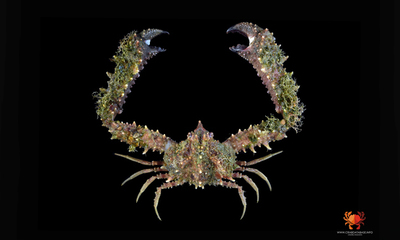
The carapace is often large, smooth, and sometimes rough. Usually, it has noticeable tubercles or spines, especially on the edges. Ten pairs of legs make up the crab. The first pair are powerful, massive chelae, or claws, which are employed for both protection and catching prey. The remaining limbs are elongated, thin, and designed to support walking. The chelae can have asymmetrical claws, with one claw being larger than the other, and are usually strong. The long, forward-projecting rostrum of the carapace is frequently decorated with spines or beak-like appendages that offer extra protection and may be used for digging or other environmental manipulation. A broad field of vision is provided by the eyes’ position on stalks that protrude from the carapace. Usually, these stalks are sturdy and short. Sensing the surroundings and finding food are vital functions of the long, sensitive antennae.