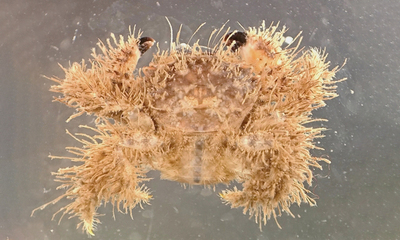
In general, the carapace is tiny and shaped roughly like a quadrate. Its texture is usually smooth to slightly granular, with the possibility of faint ridges or grooves. Usually varied, N. heterodon’s coloration frequently blends in with its surroundings to help with hiding. The colors vary, often having mottled patterns and ranging from light brown to darker tones. In contrast to other crab species, the rostrum is more subtly from the front of the carapace. It could be covered in tiny spines or extended like a beak. Five pairs of legs make up this kind of crab. The chelae, which are employed for defense and feeding, are the first pair. They are usually robust. As they are designed to move on the seabed, the walking legs are comparatively short and robust. The chelae are easily recognized; they typically have a granular texture and are furnished with tiny spines or teeth. They frequently have one larger claw than the other, making them asymmetrical. The crab can see a great distance because its eyes are on small stalks that protrude outward. Usually, these stalks are strong. The comparatively short antennae are used for environmental sensing and food location.