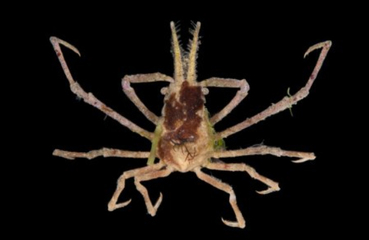
The carapace is typically pear or oval-shaped, with occasional minor elongation It typically has an uneven look because of the different spines, tubercles, or granules covering the surface, giving it a rough texture. The front of the carapace has a well-developed rostrum that extends forward. It typically has two spines or a protrusion that resembles a beak, which might be useful for warding off predators and influencing the surroundings. Spider crabs are known for their long, slender legs, which help them travel through complicated surroundings and across the seafloor. There could also be tiny hairs or spines all over the legs. The chelae are not for defense, but rather for eating and object manipulation. They are rather small concerning the body. Their texture is delicate, and they could feature tubercles or tiny spines. The eyes have a broad range of view because they are on long, flexible stalks that protrude from the carapace. The crab can now thoroughly examine its surroundings thanks to this. The long, sensitive antennas help in identifying environmental cues and locating food.