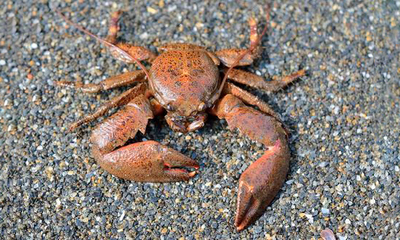
The carapace is smooth, elongated, and rather wide, usually measuring 1-2 cm in width. Its form is a little rounder. The appendages and carapace are typically pale, cream, or whitish in appearance, with deeper patterns or markings on occasion. Beyond the eyes, the rostrum is a well-developed, pointed structure. The chelipeds are asymmetrical, huge concerning the body size, and flattened, with one claw typically being marginally larger than the other. They serve as a means of communication, defense, and feeding. The legs used for walking are small and designed to cling to objects and move between rocks and cracks. Reduced and frequently hidden behind the carapace is the final set of legs. The eyes have a broad range of vision because they are situated in front of the carapace on short stalks. For sensory perception, the long, thin antennae are employed.