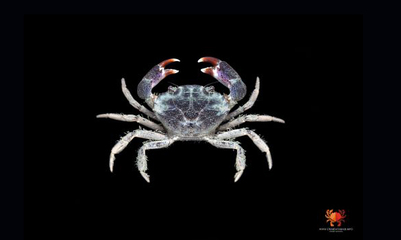
Its olive-green to brown coloring helps it blend in with the weedy and muddy substrates of its estuarine habitat. Depending on the surroundings, the coloring may vary significantly. Usually wider than it is long, the carapace has a broad, slightly oval form. Its smooth, slightly convex surface makes it a streamlined body for mobility. The chelae are strong and asymmetrical, with one claw typically the right one being noticeably bigger than the other. They have developed the ability to grab, crush, and forage for food, including small invertebrates and debris. Sturdy and rather short, the walking legs offer stability when traversing muddy or soft surfaces. Small bristles or spines on the legs can help with traction. A broad field of vision is made possible by the well-developed and stalked eyes, which is essential for identifying prey and predators in frequently murky water. Certain individuals may have fine hairs (setae) on their legs and carapace, which aid in camouflage and sensory perception. As is typical of many crab species, the abdomen (or pleon) is tucked under the carapace. The wider abdomen of females may be employed to transport eggs. This crab frequently favors muddy or soft-bottom substrates where it can burrow and hide.