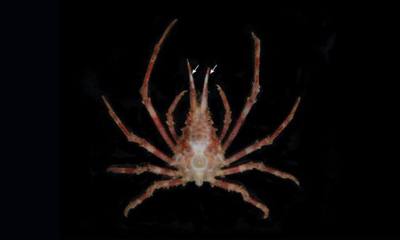
The crab usually blends in nicely with its surroundings due to its dull appearance, which includes bones of brown, grey, or reddish-brown. Its camouflage is further improved by the added decoration made of algae and other materials. Usually longer than wide, the carapace is elongated and generally triangular or pear-shaped it sa rough texture due to the granules or tiny spines covering it. There may be tiny, sharp protuberances or spines on the carapace’s lateral borders. Two thin, forward-pointing spines that protrude between the eyes make up its distinctive rostrous. Like other spider crabs, they have long, slender walking legs that are frequently coated with setae (bristles) and spines. When the crab decorates itself, its lengthy legs aid in concealment and facilitate efficient movement across rocky or sandy surfaces. The chelac are weaker and smaller than the lengthy walking legs. They may have tiny serrations along the fingers and are mostly useful for handling food. It displays decorator behavior, camouflaging its legs and carapace with sponges, algae, or other tiny aquatic life. Numerous tiny spines and tubercles decorate the legs and carapace, which facilitate the attachment of camouflage materials. In addition, these spines offer some protection from predators.