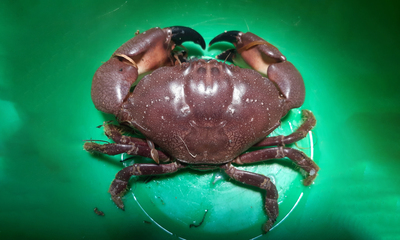
The large, usually spherical or slightly hexagonal carapace is somewhat flattened. It has a rough texture all over and frequently has tiny tubercles or spines that give it a rustic look. With a substantial amount of development, the rostrum protrudes somewhat from the front of the carapace. It could have little protuberances or spines. The first pair is significantly larger and stronger than the rest. The legs are muscular and relatively long. One chelae is noticeably bigger and more robust than the other, resulting in an asymmetrical chelae. The smaller, more delicate claw is utilized for feeding, while the larger claw is employed for defense and manipulation. A large field of vision is provided by the eyes, which are situated on short, flexible stalks that protrude from the carapace. The antennae’s sensitivity and relative shortness help in food and environmental sensing. To improve camouflage and provide some protection from predators, the legs and carapace may develop tiny spines or tubercles.