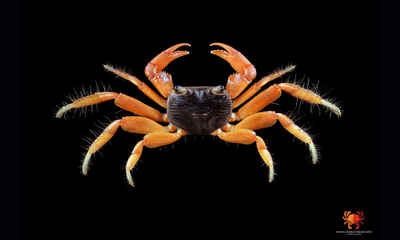
G. stormi has a range of colors, frequently with a mottled appearance. Its fundamental hues, which vary from dark brown to greenish or grayish tones, aid in its ability to blend in with mangrove habitats and rocky soils. Typically, large and rather oval, the carapace has a smooth surface. It has a strong body shape since it is wider than long. The eyes have a large field of vision and are prominently situated on stalks Foraging for food and spotting predators both benefit from this adaption. The chelae are robust and somewhat massive, although they are asymmetrical because one claw is frequently larger than the other. Both protection and eating (crushing prey) are well-suited for the class. The long, thin walking legs allow for effective mobility on rough and rocky terrain. It helps to swim if the final pair of legs are slightly flattened. Small tubercles or granules frequently cout the legs and carapace, adding to the rough feel. The crab’s ability to conceal itself and adhere to surfaces may be enhanced by this surface characteristic. Usually active during the day, it forages for food, which includes small invertebrates, algae, and debris. lis versatility is attributed to its capacity to climb and move across a variety of substrates.