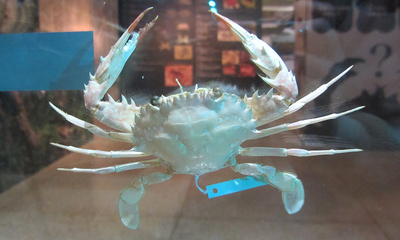
The carapace is broad and oval-shaped, slightly flattened, which provides stability and helps with swimming. It is typically wider than it is long. Typically, the color is grayish or bluish-green with lighter patches or dots. The hue can help with hiding from predators and can change based on the surroundings. Its asymmetrical, massive, and powerful claws are typically larger on one side than the other. The smaller, more delicate claw is used for handling food, while the larger one is utilized for defense and catching prey. The claws can be rough-textured and equipped with sharp edges that are useful for cutting and grabbing. It can detect movement and any hazards in its surroundings because of its large range of vision and conspicuous compound eyes on moveable stalks. The first pair of the crab’s five pairs of legs is longer and stronger than the rest. These legs are designed for both walking on the substrate and swimming. To provide traction and facilitate locomotion across rough or sandy terrain, the legs may develop setae or spines. It can swim because its pleopods are well-developed. These limbs facilitate the crab’s efficient swimming and can help in molting. The abdomen is curled under the body and is somewhat narrow, which is characteristic of crabs in the Portunidae family. The crab’s abdomen’s form and suppleness allow it to fit into burrows or shells.