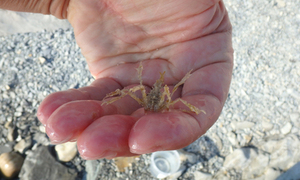
The body is small, narrow, and inangular with an extremely elongated rostrum and long, spider-like legs. The carapace is long, pear-shaped (piriform), tapering anteriorly, with a smooth or finely granubted surface, usually measuring 1.5 to 2.5 cm in length, small relative to the leg span, and may be covered in algae er debris for camouflage. The rostrum (snout) is very long, slender, and bifid (forked), extending well beyond the eyestalko making it a key sdentifying feature. Eyes are small, stalked, and close together, located just behind the base of the rostrum. The coloration is variable, usually reddish, brownish, or greenish, often matching its surroundings due to epibionts like algae or debris. The first pair of legs are chelated (clawed), relatively shorter than the walking legs, and used for food manipulation. There are four pairs of walking legs (pereiopods), which are extremely long, thin, and spindly, often covered in hooked setae to help hold camouflage material. The abdomen (pleon) is tucked under the cephalothorax, broad in females for carrying eggs and narrow in males. The camouflage adaptation includes decorating its body with algae, sponges, and other materials t blend into its habitat, a common trait in Majoid crabs.