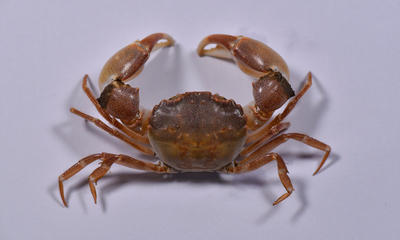
The coloration is generally pale brown or gray, often with mottling that may help in camouflage with sandy or muddy substrates. The carapace is smooth, large, round, and somewhat flat. It is wider than long, and the species gets its name from the distinctive notches or serrations (crenate) on the carapace borders. The carapace’s frontal region is smooth and somewhat straight, with tiny, uniformly spaced lobes or teeth on the edge. Short and closely spaced eye stalks are present. The chelac are symmetrical and comparatively small. They are designed to handle smaller animals and forage on sandy surfaces; however, they are not as strong as other species. The walking legs have short bristles, are long and thin, and are slightly flattened. The final set of legs resembles paddles, which helps with swimming and burrowing in soft soil. The eyes are on short, flexible stalks and are somewhat tiny. This crab’s small eyes give it a steady field of vision in the sandy, muddy conditions it usually inhabits. Because of their robustness, the eye stalks help shield the eyes from sediment or other objects in the water.