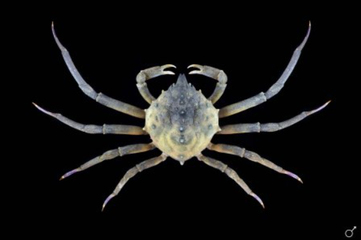
The carapace is usually broad, texture-rich, and slightly convex Its appearance is harsh and spiky because of the many prominent spines or tubercles covering. Muted tones like brown, gray, or reddish hues are typically present in the coloring. The legs are long and thin, with small hairs or spuses covering them. The chelae, which are smaller and slenderer than the body, are more for manipulation and feeding than for protection. The rostrum, which protrudes from the front of the carapace, is noticeable. Usually, it is decorated with projections that resemble heaks or spines, which can aid in interaction with the surroundings and protection. The eyes are situated atop brief protuberances that radiate from the carapace. A large field of vision is provided by these flexible stalks. Because of their length and sensitivity, the antennae are essential for spotting changes in the surrounding environment and finding food sources. Numerous spines, or tubercles, cover the legs and carapace, helping to defend the arunal from predators and aid in concealment