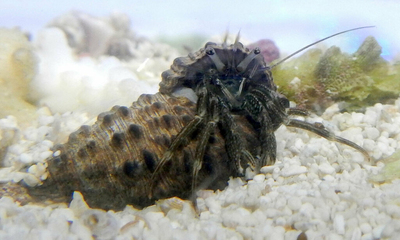
This species is known for its unique color pattern, which usually consists of pale or bright blue bands on the legs with darker bands in between. It is visually different from other hermit crab species because of these bands. Its vibrant image is further enhanced by the antennae’s typical brilliant colors, which are frequently orange or red. The carapace is typically oval and somewhat flattened, with a smooth or slightly rugose texture. It has a rounded appearance and may exhibit a slightly glossy surface. The left of its two cheliped claws is marginally bigger than the right, but they are about the same size in comparison to other hermit crabs, which have a single, considerably larger claw. Small granules or tubercles frequently cover the claws, which are utilized for handling, eating, and defense. In contrast to the legs, the blue banding on the claws can occasionally be more vivid. It possesses four pairs of pereopods or walking legs, the smaller rear legs serve to keep the crab inside its shell, while the bigger, more robust front two pairs are better suited for walking. The species is distinguished by its elongated, slender legs with vivid blue bands that alternate with darker or brownish bands. The legs also have fine hairs called setae, which help with grip and mobility. Like hermit crabs, it has large, stalked eyes. These eyes offer a broad field of vision for finding food and spotting predators The eye stalks frequently have a reddish or orange tint and are light in color. There are two pairs of antennae in this species. While the shorter antennae are utilized to detect food and nearby stimuli, the longer antennae are used to sense their surroundings. Its aesthetic appeal is increased by the often vividly colored antennas. The abdomen is asymmetrical to fit tightly into the spiral of the shell, and its body color and texture can vary depending on environmental factors