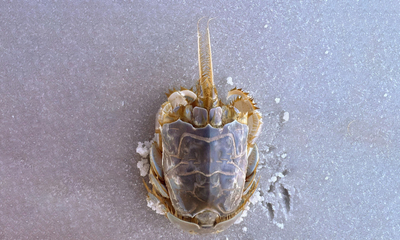
The body is usually asymmetrical and lengthy, like other hermit crabs. Often defined by a light brown or reddish-brown backdrop with pronounced dark spots or patterns, this species has a varied color pattern. Individuals may have different sizes and intensities of these patches, which effectively blend in with their natural surroundings. The carapace typically has a smooth surface and an oval form. It offers stability in its environment because it is rather sturdy and flattened. The size of the chelipeds is uneven, with the right claw being noticeably bigger than the left. Strong and extensively calcified, the bigger claw is designed for both food manipulation and defense. The rugose surface of both claws has tubercles or tiny bumps that could improve grip when foraging or clinging to items. It has four walking leg pairs. The hind legs are smaller than the first two pairs, which are usually larger and stronger to help with stability and movement. Slender and coated in tiny hairs called setae, the legs help with traction and mobility on a variety of surfaces. The eyes have a broad range of vision because they are situated on long, stalked peduncles. The crab’s eyes, which are often black and sometimes noticeable, aid in its ability to identify both prey and predators. There are two sets of antennae on the crab. While the shorter first antennae help with balance and navigation, the longer second antennae are sensory organs that aid in detecting environmental cues. The soft, curled abdomen is made to fit tightly within the shell it lives in. This adaptability is essential for defense against environmental dangers and predators.