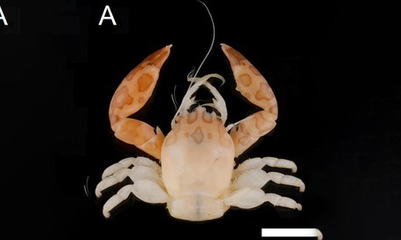
Usually averaging 1-2 cm in width, the carapace is smooth, flattened, and somewhat broad. Generally, its shape is more oval or almost round. Intricate patterns or dots are frequently seen on the carapace and appendages, which display vivid colors. A striking effect is sometimes achieved by combining colors such as pink, red, orange, and white. Extending forward between the eyes, the rostrum is well-developed and bifurcated. The flattened, enormous chelipeds typically have one larger claw than the other. Their functions include signaling, eating, and defense. There are tiny hairs all over the claws, and they could feel a little grainy. The legs used for walking are thin, designed to fit through cracks and stick to surfaces. Usually concealed beneath the carapace, the final set of legs is smaller. The front of the carapace houses the eyes, which have a broad field of vision and are supported by short stalks. For sensory perception and environmental cue detection, the long, slender antennae are employed.